Emergency Callout

Emergency Callout

Most solar faults can wait for a scheduled visit. A handful cannot — and knowing the difference matters, because a solar system is electrical plant that keeps generating live DC voltage every daylight hour, whether or not the inverter is on. If your system is showing any of the warning signs below, isolate it if you can do so safely, and call us. Genuine emergencies jump our schedule, nationwide.

Call Immediately If You Have

Emergency Callout 02
Emergency Callout 01

Safety First — Before You Call Anyone

1
If there is fire or smoke, call 112/999 first and get everyone out. Solar and battery incidents are for the fire service, not a screwdriver.
2
Switch off the solar system's AC breaker at your consumer unit if it is safe to reach.
3
Switch off the DC isolator only if it is safely accessible — never climb, reach over equipment, or touch anything hot, wet or damaged to get to it.
4
Never spray water on electrical or battery equipment, and never attempt to disconnect panel cabling yourself — panels produce lethal DC voltage in daylight even when everything else is off.
5
Keep people and pets clear, then call us. Our triage line is answered by a registered electrician who will assess the risk with you immediately.

What We Do on an Emergency Callout

Phone triage first. A registered electrician assesses the situation with you on the call, talks you through safe isolation, and honestly tells you whether this is an emergency or a standard booking — because a genuine emergency deserves the response, and a non-emergency deserves the cheaper callout.
Prioritised dispatch. Emergency callouts jump the schedule.
Make-safe. The immediate hazard is isolated and secured — including temporary disconnection or panel securing where required — before any question of permanent repair.
Diagnosis and repair plan. What failed, why, and a fixed-price quote for the permanent repair. For storm and fire damage you also get photographed, insurance-ready documentation of the damage and the make-safe works.

Storm Damage — Document Everything, Touch Nothing

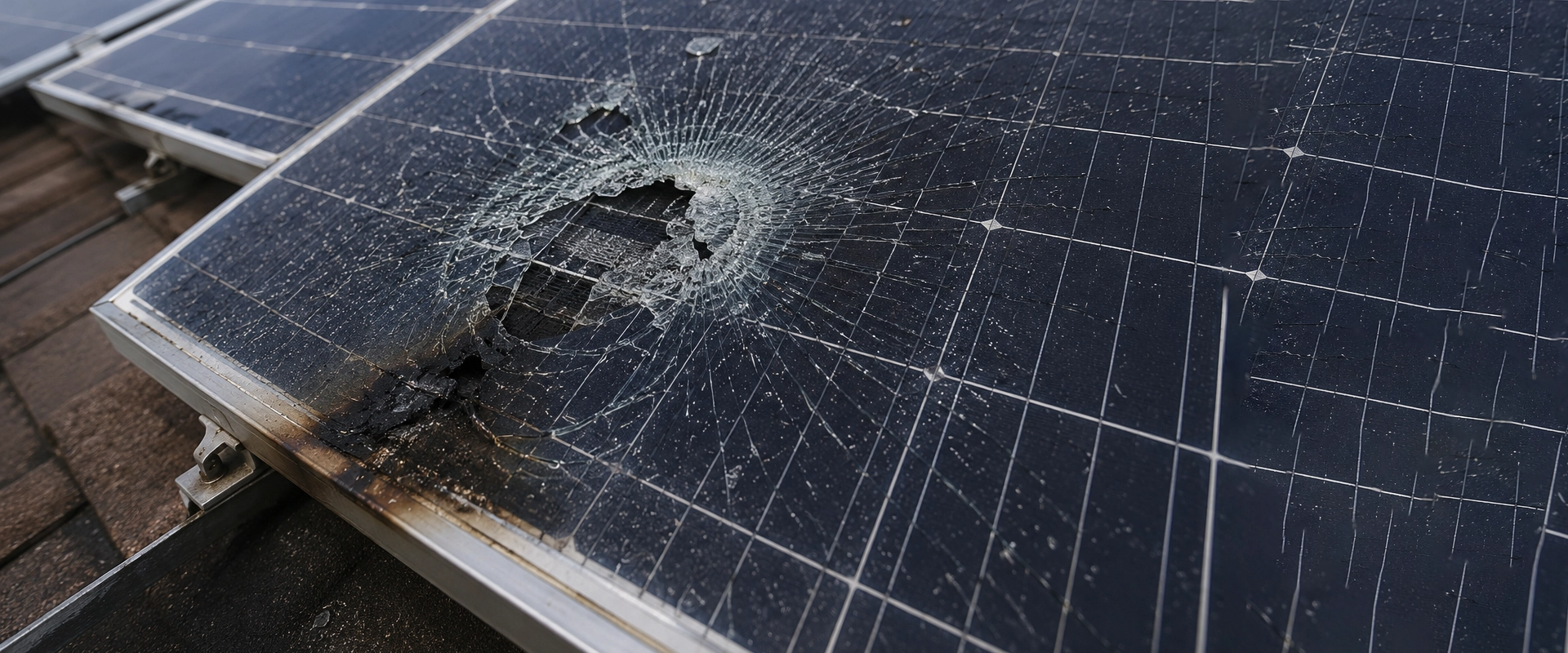
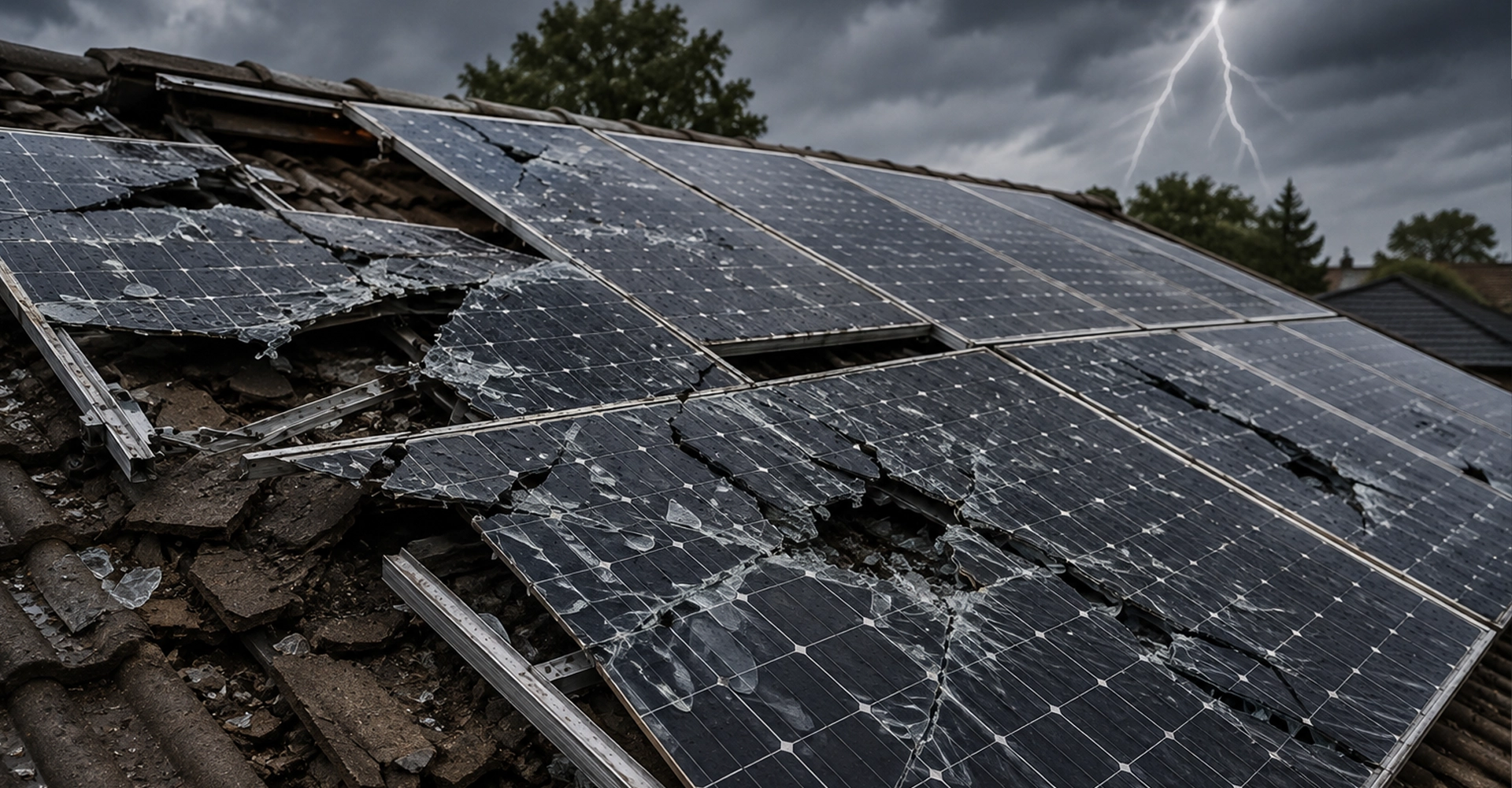
After every named storm, the same pattern lands in our inbox: lifted panels, sheared fixings, and water-damaged rooftop isolators. If your system has taken storm damage, three rules protect both your safety and your insurance claim:

Why the DC Side Is Different

Even with the inverter off and the AC breaker down, solar panels keep producing power in daylight — a domestic string can sit at several hundred volts DC, and DC arcs don’t self-extinguish the way AC arcs do. This is why solar electrical emergencies need a Safe Electric registered electrician with PV experience rather than a general electrician, and why our make-safe procedure always isolates to IS 10101:2020 before any work begins. It’s also why ‘my brother-in-law will look at it’ is the one suggestion we’ll always argue with.

Pricing

Emergency callout and make-safe: €PRICE. Permanent repairs quoted fixed-price after make-safe. Care Plan members receive priority response and discounted emergency rates as standard

Frequently Asked Questions

Is a dead inverter an emergency?

Usually no — it's urgent, because you're losing generation every daylight hour, but it isn't dangerous. Booking a standard diagnostic is faster to schedule and cheaper. Burning smells, tripping RCDs, storm damage and battery alarms are the emergencies.

Do you cover weekends and evenings?

Will my insurance cover storm damage to solar panels?

In most cases yes — solar panels are typically covered as part of the buildings under Irish home insurance policies. Check your excess, notify early, and use our documentation to support the claim. We can liaise directly with your loss adjuster where helpful.

My installer is gone and the system is sparking — can you still come?

Yes. Who installed the system makes no difference to an emergency response — and orphaned systems are our specialty in any case.

The RCD trips every morning and resets fine by lunch. Emergency?

Not an emergency, but a classic developing earth fault — moisture in a DC connection overnight. Book a standard diagnostic promptly: these faults never fix themselves, and they eventually stop resetting.